Shopping cart
You have no items in your shopping cart.

By Castle Furniture · Updated August 9, 2026
The best wardrobe door depends on your room size, style, and daily needs. Sliding doors save space in tight areas, hinged doors offer full access and classic appeal, while bifold and pocket doors provide versatile solutions. But beyond the basic mechanism, your choice must account for Houston’s punishing humidity, your home’s acoustic profile, and how the door integrates with the lighting and hardware you’ve already selected. At Castle Furniture Design Center, we’ve spent 35 years hand-selecting luxury imported furniture from Italy and Spain, and we’ve seen which doors remain solid and well-made decades later—and which fail within two seasonal cycles.
Key Takeaways
In Houston, the material of your wardrobe door isn’t an aesthetic choice—it’s the primary determinant of whether the piece remains structurally sound for decades or begins warping within two seasonal cycles. Engineered wood substrates with high-quality veneers—specifically the Kotò, Termocotto Oak, and walnut veneers found in collections from Alf Italia and Arredo Classic—consistently outperform solid wood in this climate. Solid wood expands and contracts dramatically with moisture swings, leading to sticking doors, cracked joints, and visible gaps. A high-gloss lacquer finish over an engineered core seals the surface completely, preventing moisture ingress. We specify pieces with UV-cured lacquers for this exact reason; they don’t yellow or micro-crack over time the way standard polyurethane finishes do.
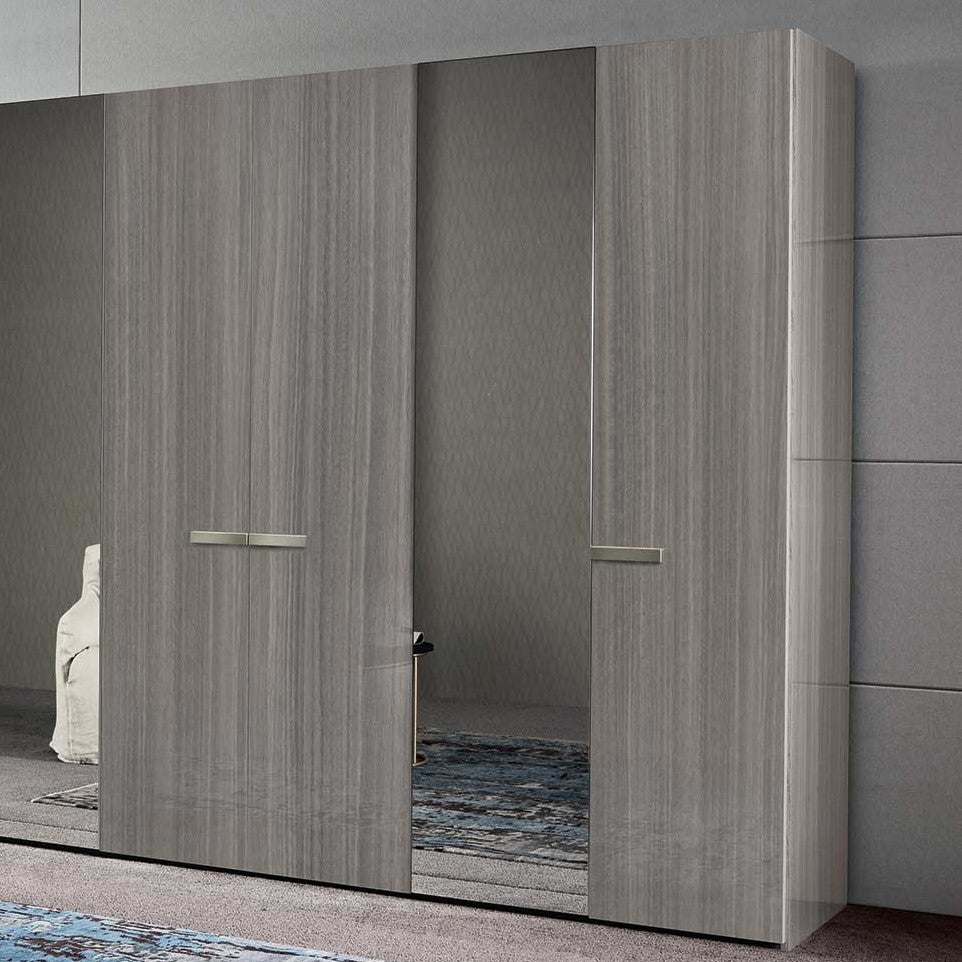
Glass and metal doors present a different maintenance profile. Glass won’t warp, but Houston’s humidity condenses on cooler surfaces overnight, leaving water spots that etch into the glass if not wiped down weekly. Metal frames in chrome or stainless steel resist corrosion, but only if the underlying steel is grade 304 or higher—a specification we verify during our sourcing trips to Italy and Spain. Avoid any wardrobe with brass-plated hardware; in a humid master bedroom without constant dehumidification, the plating will pit and lift within 18 months. Eco-stone and marble accents are dimensionally stable but require sealing every 12 to 18 months to prevent humidity-driven efflorescence.
For a Houston homeowner who wants furniture that still looks exceptional years later, the lowest-maintenance, highest-durability combination is an engineered wood core with a hand-selected wood veneer, finished in high-gloss lacquer, with solid stainless steel or chrome hardware. This isn’t theoretical—it’s what we’ve validated across thousands of client installations from River Oaks to The Woodlands, where repeat customers return precisely because their first wardrobe doors haven’t budged, stuck, or dulled since the day our white-glove team set them in place.
The true cost of a wardrobe door extends far beyond its initial price tag. A pre-hung, mass-produced door system from a big-box retailer often appears cheaper on the invoice, but that figure rarely accounts for the hidden penalties: the hours spent retrofitting an imprecise opening in a home where foundation shifts are a reality, the inevitable sag of a lightweight track, or the visual fatigue of a finish that looks starkly out of place against curated bedroom pieces.
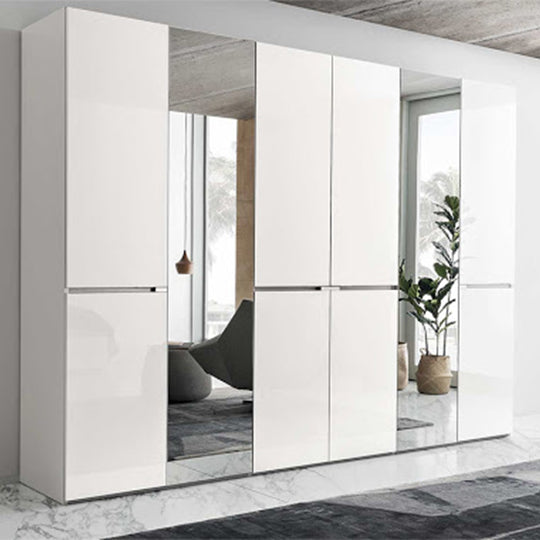
Customization, as we practice it, is not an abstract upsell. It is the practical solution to Houston’s architectural quirks—older homes in Braeswood Place with ceilings that have settled out of square, or a newly built master suite in Katy where you want a floor-to-ceiling wardrobe wall that a standard 80-inch pre-hung unit simply cannot fill. Our design consultants work with flexible options for layouts, finishes, and timelines, so the cost you see reflects a door engineered to your exact opening, eliminating the labor overruns and awkward shimming that erode any initial savings on a stock door.
When you factor in installation complexity, a pre-hung door that arrives in a fixed width demands on-site carpentry to close gaps or, worse, destructive reframing. A custom-specified door from our Italian partners arrives dimensioned for a seamless fit, which our white-glove delivery team installs with precision, not improvisation. Long-term value is measured in what the door does for the room a decade from now. A wardrobe door with soft-close, fully integrated hardware and a high-gloss lacquer or Termocotto Oak veneer will operate silently and look stunning through years of humidity cycles that delaminate lesser substrates. This is the difference between a piece you replace during the next renovation and one that remains solid, contributing to the cohesive design aesthetic that discerning homeowners expect.
The acoustic and privacy performance of a wardrobe door hinges almost entirely on its material density and sealing tolerances, and the right choice shifts dramatically depending on whether you are designing a master suite sanctuary or a shared hallway space. In a master bedroom, the goal is typically to dampen internal noise—the rustling of clothes, the soft hum of a television—while maintaining visual calm. Solid-wood veneer doors, such as those finished in walnut or Kotò wood, provide a natural sound barrier. The mass of high-gloss lacquered panels reflects and absorbs sound waves far more effectively than hollow-core alternatives, preventing the hollow echo that cheapens a room’s atmosphere.
However, solid doors alone are not enough; the gap at the base of the frame is a common pitfall that leaks sound. A tight, floor-hugging fit with a minimal reveal—ideally less than a quarter-inch—seals the acoustic envelope, creating the quiet, cocooning effect a master bedroom demands. In shared spaces, such as a guest bathroom corridor or a secondary bedroom used as a home office, the acoustic priority reverses. Here, you need to prevent sound from escaping the wardrobe and disturbing adjacent rooms. Glass-front doors, while visually stunning, are acoustically transparent unless they are tempered, double-pane units. For superior sound isolation, specify a wardrobe with integrated soft-close mechanisms and full-perimeter gaskets. These rubberized seals stop the sharp, percussive sound of a door clicking shut from traveling through a quiet house.
Beyond pure acoustics, privacy is visual. A master bedroom benefits from the seamless, monolithic look of a two-door armoire with a high-gloss Eucaly Gray Eco Veneer finish, which conceals clothing clutter and reinforces a hotel-like sense of order. For a shared space, you might prioritize a five-door system with a mix of opaque and transparent panels, allowing light to pass through a glass section while solid panels shield personal items from view. At our Fondren Road showroom, you can hear the solid, weighted close of a hand-selected European piece and see how light plays off surfaces like rose gold metal inlays, ensuring the door you choose solves the specific acoustic and visual privacy needs of your home.
A wardrobe is never just a storage box; it is a defining architectural element in your room, and its surface is a canvas for light, reflection, and metalwork that ties the entire space together. Start with the finish. A high-gloss lacquer door in a deep neutral, sourced from an Italian atelier like Alf Italia, does more than conceal clothing—it catches and throws light across the room, making a space feel larger and more luminous without adding a single square foot. Pair that with the right hardware, and the piece transforms. Swapping standard pulls for a rose gold or chrome finish immediately links the wardrobe to the metal accents on your nightstand lamps, the legs of a chaise longue, or a sculptural floor lamp from the same collection. We hand-select pieces specifically for this coherence, ensuring the metal tone on a Giorgio Collection armoire door is an exact match to the hardware on the accompanying dresser and bed.
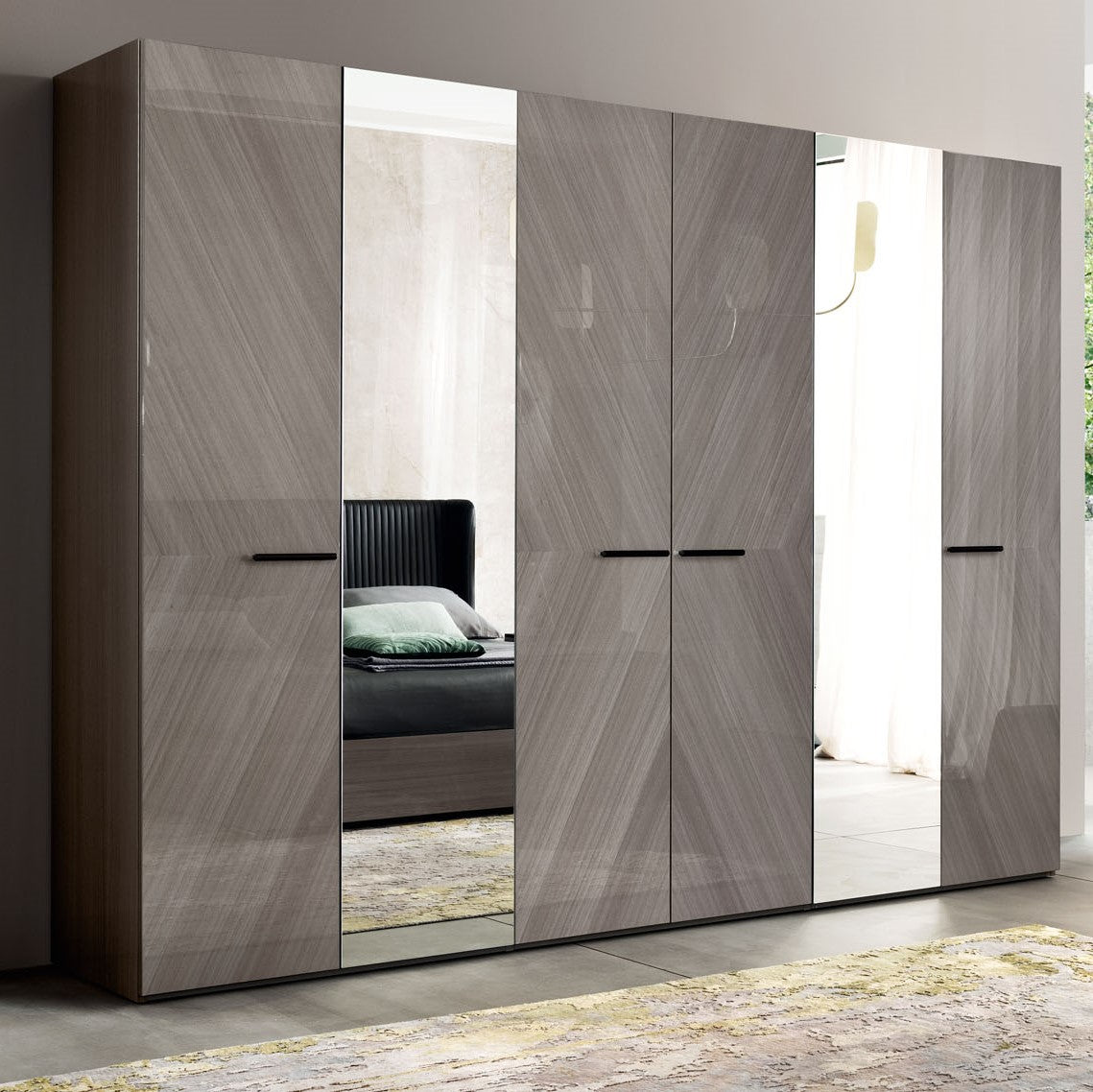
Mirrored doors present a different, equally deliberate opportunity. A full-length mirror panel on a three-door wardrobe serves a dual purpose: it eliminates the need for a separate standing mirror that clutters the floor, and it amplifies the effect of your existing lighting plan. In a room with a statement chandelier or a pair of sculptural table lamps from our lighting collection, a mirrored door surface doubles the visual impact, creating the kind of layered glow that feels custom-designed. The key is placement. We guide you through positioning a mirrored wardrobe so it reflects a window’s natural light or a deliberate vignette—perhaps a marble-topped console with a hand-painted vase—rather than an empty wall.
For those who want integrated illumination, select European collections offer wardrobes with soft LED lighting built into the interior or subtly washing the door’s face. This isn’t the harsh, utilitarian strip lighting found elsewhere; it’s a warm, diffused glow that highlights the wood veneer’s grain—whether it’s Termocotto Oak or a rich eucalyptus—and turns the simple act of opening a door into a moment of quiet theater. When you walk into our Fondren Road showroom, you see these relationships fully resolved in room vignettes, proving how a wardrobe with the correct finish, hardware, and reflective properties doesn’t just store your clothing—it completes the architecture of a space that feels entirely yours.
A wardrobe that is both stunning and responsible starts with what it’s made of and how it’s finished. The most direct path to a unique, solid, and well-made piece with genuine eco-credentials is through European-sourced wood veneers and low-impact lacquers. Rather than reclaimed wood—which can be unstable in Houston’s humidity—we focus on fast-growing, sustainably harvested species like eucalyptus and Kotò. The Iris 2 Door Wardrobe, for example, uses an Eucaly Gray Eco Veneer with a high-gloss finish, giving you a contemporary, light-reflective surface without relying on slow-growth hardwoods. For a warmer, more classic profile, the Termocotto Oak finish on pieces from Alf Italia undergoes a heat-treatment process that darkens and hardens the wood using only heat and steam, eliminating the need for chemical stains entirely.
The finish is where your indoor air quality is won or lost. Many mass-produced pieces off-gas volatile organic compounds for months. Our curated collections from Italy and Spain use high-gloss lacquers and water-based coatings that cure to an inert, non-emitting state. This is a standard you can verify when you visit our showroom at 3819 Fondren Rd—you will notice the absence of that sharp chemical smell common in big-box stores. When you walk through our room vignettes, you are experiencing furniture that respects both the craftsmanship of its origin and the air inside your Houston home. This is how you own something that feels exceptional years later, knowing it was built with a deliberate, responsible material choice from the start.
A wardrobe designed for accessibility doesn’t have to look institutional. The most transformative choice for aging-in-place in a Houston master suite is the door’s operation itself. Sliding doors on a high-quality track eliminate the clearance arc of a swinging door—critical when navigating around a bed with a walker or simply wanting to avoid a sharp corner in the dark. Within our hand-selected Italian collections, you’ll find sliding mechanisms that glide with a single finger’s pressure, a detail that makes daily use effortless whether you’re 35 or 75.
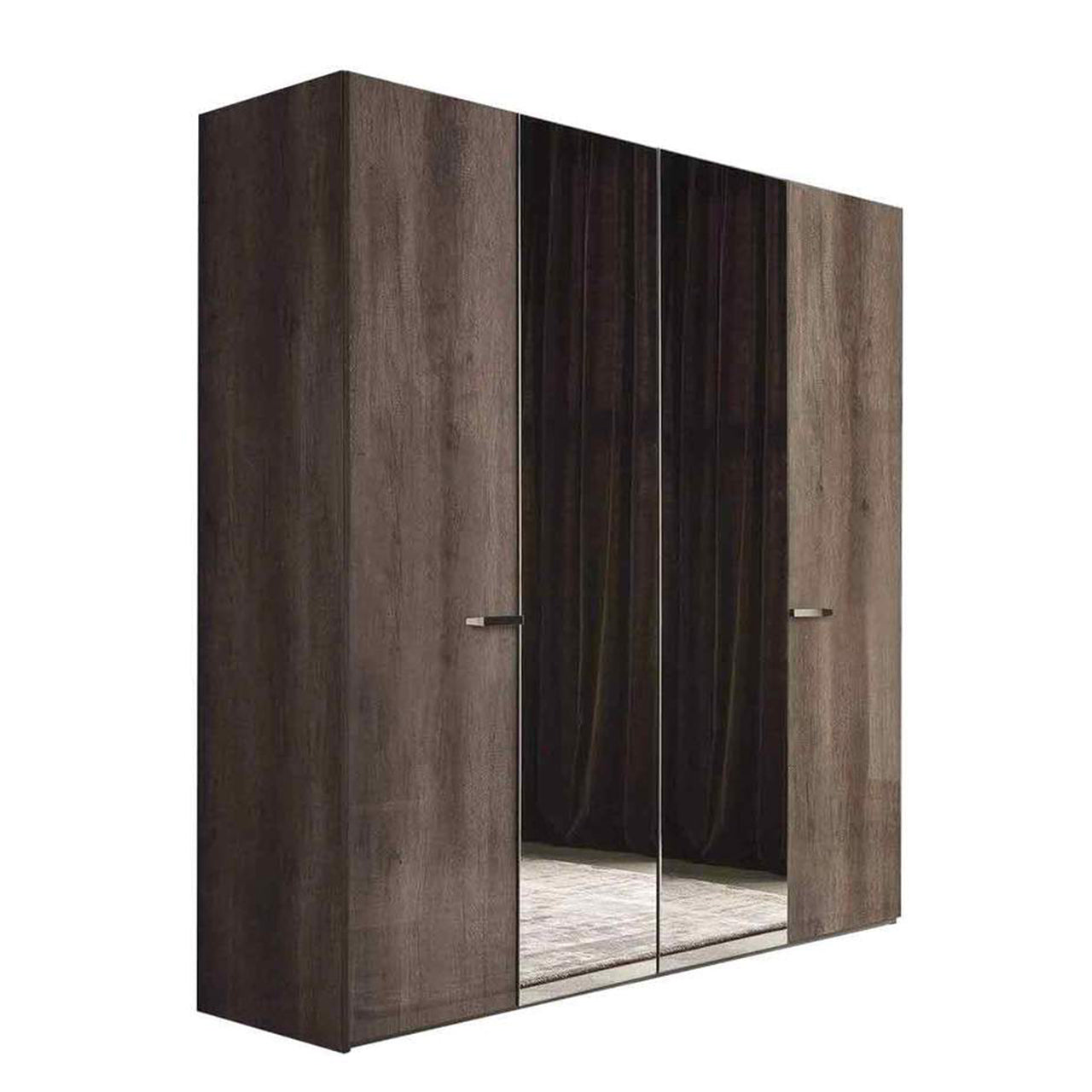
The hardware is where universal design becomes invisible luxury. We steer clients toward D-shaped pulls and integrated vertical handles from makers like Alf Italia, which offer a full-hand grip rather than a pinch. These aren’t aftermarket adaptations; they’re integral to the piece’s modern Italian silhouette, finished in brushed metal that resists fingerprints. For a master bedroom, a three-door wardrobe configuration can be specified with a central mirrored panel that starts low enough to be useful from a seated position, removing the need for a separate full-length mirror that consumes wall space.
The interior layout matters just as much as the door. We plan hanging rods that can be set at a lower height without sacrificing the wardrobe’s exterior proportions, and pull-down rods can be integrated into a custom order from our European workshops. Soft-close drawers eliminate the slam and the strain. Wide openings are a given with a four- or five-door configuration, but the real key is a low-profile bottom track that sits nearly flush with the floor, removing a tripping hazard while preserving the sleek, contemporary line you want in a room that feels curated, not clinical.
In Houston’s luxury neighborhoods—River Oaks, Memorial, West University—wardrobe doors are fixed architectural elements scrutinized during appraisals, not disposable furniture. A custom-fitted, floor-to-ceiling Italian wardrobe system from a brand like Alf Italia or Giorgio Collection signals built-in permanence that appraisers classify as a fixture, directly adding to square-footage valuation rather than being dismissed as personal property. Buyers touring a master suite immediately recognize the difference between a hollow-core sliding slab and a solid, hand-selected armoire with soft-close hinges and a high-gloss lacquer finish: the latter communicates that the entire home was maintained without compromise.
This perception translates into faster offers and fewer concession requests during inspection negotiations. When the wardrobe feels integral to the architecture, the room reads as a fully resolved design, not a space requiring a future renovation budget. For resale, the critical factor is material authenticity. Veneers like Termocotto Oak or Eucalyptus Gray Eco Veneer, finished with precision in Italian workshops, hold their visual weight over years of humidity cycles, avoiding the warping or delamination that instantly devalues a bedroom suite in an appraiser’s eyes. The presence of recognized luxury labels—Arredo Classic, Hurtado—also provides a verifiable pedigree that listing agents can cite in marketing, positioning the home above comparable properties with generic closet solutions. This isn’t about staging tricks; it’s about installing a permanent asset that appraisers and buyers both read as a mark of a meticulously built home.
Begin by clearing the entire wall where the wardrobe will sit—you need unobstructed access to measure width at three points: near the floor, at the midpoint, and near the ceiling. Record the smallest of these three numbers as your working width. For height, measure from the floor to the ceiling at the left, center, and right of the wall; the lowest measurement is your working height. This is non-negotiable because walls and floors in Houston homes—especially in neighborhoods like West University or Memorial where foundation shifts are common—are rarely perfectly square. A 90-inch wardrobe ordered for a wall that dips to 89½ inches in one corner simply will not fit, and no amount of shimming will make it look intentional.
Next, measure the depth of the space from the back wall to any opposing furniture or door swing. Swinging doors demand a clearance zone equal to the door width plus at least 24 inches of standing room. For a three-door wardrobe like the Alf Iris—which spans roughly 59 inches wide with doors that swing out—you need a minimum of 54 inches of total depth clearance. Sliding doors eliminate this requirement entirely, making them the better choice for tighter master suites or shared spaces where traffic flow matters.
The most common pitfall we see is ignoring baseboards. If your baseboard is ¾ inch thick and runs along the wall where the wardrobe will sit, the unit must either be designed with a cutout or you must plan to remove that section of baseboard before installation. A wardrobe pushed flush against a baseboard leaves an unsightly gap behind it and will never sit stable. Similarly, check for uneven flooring. A ¼-inch slope across a six-foot run will translate to visibly crooked doors that bind at the top or bottom. Use a 4-foot level and shims to determine if floor leveling compound is needed before delivery.
Finally, verify that your ceiling height accommodates the wardrobe’s assembly. Many of our hand-selected Italian wardrobes arrive partially assembled and require upright clearance to stand the frame. A 90-inch-tall wardrobe needs at least 92 inches of vertical clearance to tilt it into position. At our Fondren Road showroom, we walk you through these measurements during your design consultation so that what arrives via white-glove delivery fits precisely—no surprises, no damage, and a room that feels fully solved from the moment it’s placed.
Engineered wood with high-gloss lacquer resists warping and moisture better than solid wood, making it ideal for Houston's humidity.
Yes, sliding doors save space by not swinging outward, making them ideal for tight areas where clearance is limited.
Choose grade 304 stainless steel or chrome hardware, and avoid brass-plated options which pit and lift within 18 months.
Yes, custom doors fit precisely, eliminate installation overruns, and use durable materials that withstand humidity, reducing replacement costs.
Solid-wood veneer doors with minimal base gaps offer superior acoustic privacy by dampening internal noise effectively.